

A routine blood test still requires accurate preparation, patient identification, careful tube handling, and timely transport, even when the appointment takes place at your home. By planning the booking, fasting period, urine sample, and appointment window together, you can reduce avoidable delays and decide when home collection fits your needs better than a laboratory visit.
Key takeaways
- Book around your fasting window, wake-up time, and household commitments.
- Confirm whether your test requires fasting and what you may drink.
- Check the collector’s identity, sealed supplies, labels, and sample handling.
- Choose home collection when travel is difficult and the test suits doorstep sampling.
Book the appointment around your fasting window and household schedule
Choose the collection date by working backwards from the laboratory’s fasting instruction, then protect that morning from school runs, meetings, or caregiving. A fasting appointment time that fits your last meal and usual wake-up routine is easier to keep than the earliest slot. Home collection removes travel and waiting, not laboratory turnaround time.
- Keep the test order or prescription nearby. Ask whether the requested test is supported by home collection and whether it needs a special tube, rapid processing, or temperature-controlled transport.
- Choose a date when you can remain available for the stated arrival window. Leave time afterward for work, childcare, or travel rather than booking the blood test appointment between two fixed commitments.
- During the home blood collection booking, provide the complete address and phone number. Add building, floor, landmark, access instructions, and a number the collector can reach that morning.
- Confirm the date, fasting appointment time, arrival window, tests requested, payment terms, and how you will receive the report. Save the confirmation message.
Call before booking if the test must be collected at a particular time of day or requires a venous sample instead of a finger-prick sample. A routine home visit is not suitable for severe breathing difficulty, fainting, or other symptoms needing immediate assessment; seek urgent care instead.
Prepare for fasting without guessing what your test requires
Fasting blood test preparation starts with the test order, not a guess. Confirm whether fasting is required, how long it lasts, and whether any medicine needs special timing. A complete blood count, for example, does not automatically require the same preparation as a lipid or glucose test.
- Eat your normal meal before fasting begins, then follow the laboratory’s stated start time. Do not eat snacks, sweets, chewing gum, or drink tea, coffee, juice, milk, or soft drinks during the fasting period.
- Drink only plain water before blood test collection unless the laboratory gives different instructions. Water helps prevent dehydration, which can make a blood draw harder.
- Ask the prescribing clinician about medicines before blood test collection. Do not stop insulin, blood-pressure tablets, or other prescribed medicines unless that clinician tells you to; record the dose and time taken.
- Avoid smoking, alcohol, and strenuous exercise during the preparation window because they can alter some results. Rest before collection.
- For urine sample collection at home, use the supplied sterile container or confirm which container the laboratory accepts. Wash your hands, clean the genital area as instructed, collect a midstream sample without touching the inside of the lid or cup, and seal it immediately.
- Use a first-morning urine sample when requested, especially for tests that depend on a concentrated specimen. Deliver it within the stated time and follow the laboratory’s storage instructions.
Ask about special handling before booking: some specimens need rapid delivery, chilling, warming, light protection, or collection at a particular time. A routine home visit cannot replace those requirements.
Know what safe collection looks like at your door
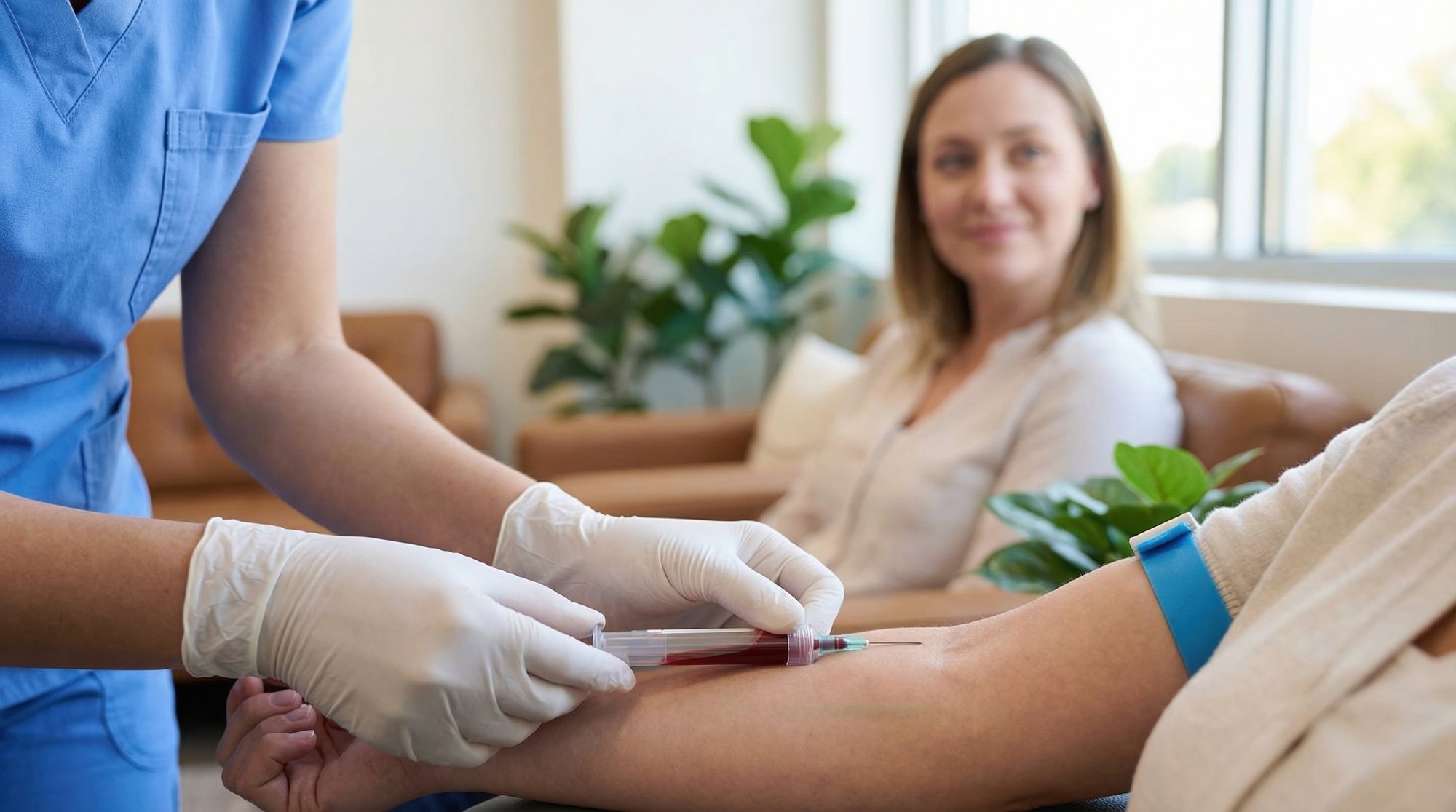
Before the draw begins, the phlebotomist should confirm who you are and what has been ordered. Show a government-issued ID if requested, state your full name and date of birth, and match those details with the laboratory request. This patient identification step prevents a correctly collected sample from being reported under the wrong person.
1. Confirm the test, preparation status, and any relevant instructions. Tell the phlebotomist about medicines, fainting during blood draws, or a preferred arm, then give consent before the procedure starts.
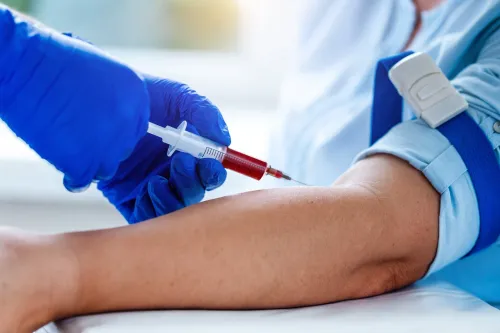
2. The phlebotomist should clean their hands, put on gloves, inspect the collection equipment, and position your arm safely. Tourniquet use should be brief; prolonged tightening can alter some results and increase discomfort.
3. After the draw, watch the tube labelling and sealing happen immediately, while you are present. Each tube should carry your identifiers, collection date and time, and any required specimen details before it leaves the room.
4. Keep pressure on the puncture site until bleeding stops. The phlebotomist should place the needle directly into a rigid sharps container, not on a table and never loose in household rubbish.
5. Ask how the sealed specimens will be transported, especially if the test needs light protection, cooling, warming, or rapid delivery. A home visit does not remove those requirements; mishandling can force recollection.
If the collector cannot verify your identity, explain the requested test, or control the used sharps, pause the visit and contact the service before accepting the collection.
Compare the real time savings with the risks of delay or recollection
Home collection saves the most time when travel, parking, registration, and waiting would take longer than the blood draw itself. It is especially useful if you have limited mobility, a transport barrier, caregiving duties, or anxiety about clinic visits. Compare the home collection versus laboratory visit on total door-to-door time, not needle time alone.
| Option | Time advantage | What can reduce convenience |
|---|---|---|
| Home collection | Removes travel and waiting-room time | Appointment windows, service fees, or a required adult at home |
| Laboratory visit | Immediate access to the collection site | Travel, parking, registration, and queueing |
| Home collection with transport | No patient travel | Sample transport time can delay accessioning and reporting |
Home collection does not automatically shorten laboratory turnaround time. The specimen still needs packaging, transport, accessioning, analysis, and reporting; temperature, light, agitation, and cell contact with serum or plasma can affect stability.
A technically difficult draw can erase the time saving. Small or collapsed veins, difficult veins, an incomplete draw, a clotted anticoagulant tube, or insufficient volume can prevent the laboratory from releasing every requested result. Hemolysis from difficult venipuncture, vigorous tube shaking, or rough transport can distort potassium, lactate dehydrogenase, and AST results.
Ask how failed samples are handled, because recollection means another appointment. For severe chest pain, major breathing difficulty, fainting, or stroke symptoms, skip routine home collection and seek emergency assessment.
Choose home collection when the test and patient are suitable
Routine blood testing at home suits people with limited mobility, transport barriers, caregiving duties, or anxiety about clinic visits. A home sample collection service also works for a stable patient who can provide access to the address and remain available for identity verification.
Home collection is not appropriate for urgent symptoms and blood testing. Severe chest pain, major breathing difficulty, fainting, or signs of stroke require emergency assessment; a blood draw cannot replace it.
Use this comparison before booking:
| Situation | Home collection fit | What to verify |
|---|---|---|
| Routine CBC or chemistry testing | Usually suitable | Venous sample requirements, fasting instructions, and report timing |
| Special handling blood tests | Requires extra planning | Correct tube, light protection, chilling or warming, collection time, rapid separation, and laboratory acceptance |
| Finger-prick testing | Test-dependent | Whether the laboratory validates capillary blood for that specific test; it is not automatically equivalent to venous blood |
| Urgent symptoms | Not suitable | Contact emergency services or an urgent-care clinician instead |
Before arranging a visit with Augmentum Diagnostics, confirm that the requested test fits its home workflow and ask whether fasting, plain-water limits, medicines, or a particular time of day apply. Also check the service fee, appointment window, expected transport time, and whether another person must be present for access or identification.
Those details prevent a convenient appointment from becoming a delayed or rejected specimen.
Related services
Health Checkup ₹2499 Special Instruction : 8 to 10 hours fasting required Parameters covered : 9 Sample(s) required : Blood, Urine, Serum OTHER_PARAMETERS (9) 1.Calcium... View service → |
Health Checkup ₹3150 Special Instruction :9 to 12 hours fasting required Parameters covered :9 Sample(s) required :Blood, Urine, Serum 1.Calcium Total 2.COMPLETE BLOOD... View service → |
Frequently asked questions
How should I schedule a home blood collection appointment?
Work backwards from the laboratory’s fasting instruction and choose a time that fits your last meal, wake-up routine, and household schedule.
How do I prepare for a fasting blood test at home?
Confirm the exact fasting requirement with the laboratory, including whether water, medicines, tea, coffee, or smoking are allowed before collection.
What should safe blood collection at home look like?
The collector should verify your identity and requested tests, use sealed supplies, label tubes correctly, and protect the samples for transport.
Does home collection reduce laboratory turnaround time?
No. It removes travel and waiting at the centre, but laboratory processing and reporting still take their usual time.
When is home collection a suitable choice?
Choose it when the test accepts home sampling and you can provide a suitable space, while considering whether urgent testing or specialised handling requires a centre visit.
Related services
Health Checkup ₹6200 Special Instruction :9 to 12 hours fasting required Parameters covered :17 Sample(s) required :Blood, Urine, Serum OTHER_PARAMETERS (17) 1.CA 125... View service → |
Health Checkup ₹1700 Special Instruction : 9 to 12 hours fasting required Parameters covered : 9 Sample(s) required : Blood, Urine, Serum OTHER_PARAMETERS (9) 1. View service → |
Health Checkup ₹6200 Special Instruction :9 to 12 hours fasting required Parameters covered :17 Sample(s) required :Blood, Urine, Serum 1.Calcium Total 2.COMPLETE BLOOD... View service → |
Health Checkup ₹3350 Special Instruction :9 to 12 hours fasting required Parameters covered :9 Sample(s) required :Blood, Urine, Serum 1.Calcium Total 2.COMPLETE BLOOD... View service → |